Podcast, episode 3: The light that ignored me — automations that just work
Episode 3 of the Homelab the Right Way Podcast, 30 minutes with three AI hosts on Home Assistant's second six months: local first, Zigbee that stays up, automations that mean something, notifications nobody mutes and a one-minute update routine, plus this week's tech news, the Pantry Tracker app and a Zigbee coordinator gear break. Player, chapters, sources and links.
Episode 3 is the Home Assistant episode. Maya, Sam and Theo work through Automations That Just Work (book 6), the book about the second six months: the house that was magic on the first weekend and that the family stopped trusting by spring. It starts with a hallway light that turned off on Theo while he was standing in it, and ends with a freezer that nobody heard about.
A note on the hosts: Maya, Sam and Theo are fictional AI hosts. Their voices are synthetic, their faces in the clips are generated, and the episode was written with AI and edited by a human. Every technical fact in the episode comes from the Homelab the Right Way books; the news segment cites its sources below.
Chapters
- 00:04 — Cold open: the hallway light that leaves you in the dark, and welcome
- 01:38 — New tech this week: PHP's critical fix, OpenBSD 8.0, Everything Smart Home joins Works with Home Assistant
- 04:58 — A home that works when the internet doesn't: local first, and one naming scheme forever
- 08:55 — Zigbee that stays up: the USB 3 trap, channels on purpose, and routers in the right places
- 14:03 — Automations that mean something: the sentence, the mode, and the motion light done properly
- 19:30 — App spot: Pantry Tracker
- 20:56 — Gear break: a Zigbee coordinator, and the cable that matters more
- 21:41 — Listener question: my family muted the house. How do I make notifications people don't ignore?
- 25:28 — Merch, the ebooks, and the free weekly email
- 26:54 — Update night without the panic, three takeaways, and where everything lives
New tech this week, with sources (01:38)
Three stories and a quick one, all checked the week of recording. The hosts only say what the sources say.
- PHP: "Critical remote code execution vulnerabilities, update now" (October 21). PHP 8.5.12, 8.4.27, 8.3.36 and 8.2.35 fix two critical bugs (CVE-2026-109618 and CVE-2026-109619) that can allow unauthenticated remote code execution. The PHP team says every installation serving web requests is at risk and rates mod_php highest, with a demonstrated exploit that fires before any application code runs. On October 23 it added an informational advisory suggesting
session.upload_progress.enabled=0until the next regular bugfix release. Self-Host Weekly reports the bugs leaked ahead of the planned patches and advises updating PHP-based self-hosted apps (and Unraid) as soon as possible. Sources: php.net news archive, php.net, Self-Host Weekly, October 23. - OpenBSD 8.0 (October 20), the 61st OpenBSD release. Highlights per Self-Host Weekly: new GPU support, ARM64 hibernation support and wireless network driver improvements. Sources: the OpenBSD 8.0 page, Self-Host Weekly.
- Everything Smart Home joins Works with Home Assistant (October 27). The family business founded by YouTuber Lewis Barclay and his dad Dave brings the Everything Presence Lite, One and Pro into the program. All three run ESPHome, talk to Home Assistant over the local network with no cloud connection, and carry the Made for ESPHome badge. Source: the Home Assistant blog.
- Quick one: Linus Torvalds made his first known AI-assisted contribution to the Linux kernel, per Self-Host Weekly, October 23.
What the episode covers
A home that works when the internet doesn't (book 6, chapter 1). Prefer local push, then local polling, then cloud (fine for weather or a car, a liability for lights and locks). The integration page says which one each integration is, a ten-minute audit. The five-minute WAN unplug test: what keeps working is on solid ground, what stops goes on a replace-or-reflash list (ESPHome, Tasmota). One naming scheme forever, area then thing then measure (light.hallway_ceiling, binary_sensor.hallway_motion), renamed at the device level, never by brand or model. Every device in an area, plus labels like battery.
Zigbee that stays up (chapter 2). The three causes of an unreliable network: coordinator placement, channel, and too few routers. USB 3.0 ports and cables radiate noise in 2.4 GHz, so the stick goes on a 1 to 2 metre USB 2.0 extension cable, a metre from SSDs, hubs and access points. Coordinators from the book's table (Home Assistant Connect ZBT-1, Sonoff ZBDongle-E and -P, SMLIGHT SLZB-06 as the network pick for a Proxmox homelab). ZHA or Zigbee2MQTT: pick once and stay. Wi-Fi on 1/6/11, Zigbee on 15 or 20 (25 with caveats), set before pairing. Only mains devices route; pair routers first and pair everything in place. permit_join: false, finish every interview, check the coordinator backup exists.
Automations that mean something (chapter 4). An automation is a sentence: triggers, conditions (checked once, ANDed), actions. The four modes and why the default, single, made Theo's light ignore him. The motion light done properly: mode: restart with a wait_for_trigger for motion off for two minutes, a timer helper so it doesn't fight the wall switch, 15% brightness after 23:00 in one choose block. for: on flappy sensors, never a state trigger without to:, helpers instead of side-effect conditions, and traces: which of four things happened, read before you change anything.
Listener question: my family muted the house (chapter 7). Three kinds of notification (needs a decision now, needs attention today, nice to know) and everything else is a log entry. tag so repeats replace themselves, channel so each phone picks the volume, an actionable garage notification with a wait and a timeout and unique action names, one daily battery list (filter with is_number first), quiet hours as a schedule helper, and the alert integration for the freezer door.
The update routine (chapter 8), in one minute. Read the breaking changes, wait for the .1 or .2, back up and take a Proxmox snapshot, update one layer at a time, and roll back instead of fixing forward at 11 PM.
App spot: Pantry Tracker (19:30)
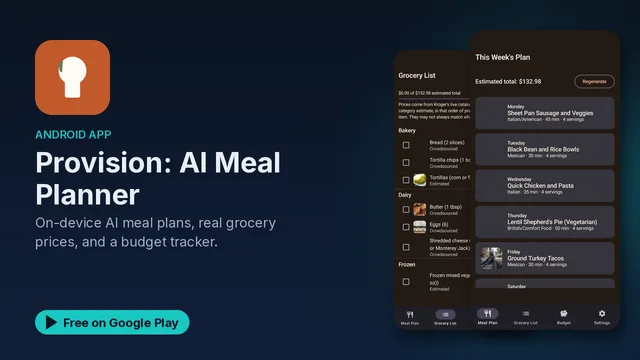
One of Charles's Android apps, free on Google Play: barcode scan or manual entry for fridge, freezer and pantry, expiry alerts with 1, 3 or 7 days' notice and a home-screen widget, and a shopping list built from low-stock and expiring items. Pro adds receipt import (on-device text recognition, you approve every line) and household sharing by file with no server and no account; the free tier has a small banner ad. Pantry Tracker on Google Play.
Gear break (20:56)
- SONOFF ZBDongle-E Zigbee USB coordinator (we may earn a commission). The book lists it as the same chip family as the ZBT-1 and a solid budget choice. Put it on a USB 2.0 extension cable.
As an Amazon Associate the show earns from qualifying purchases.
The book, the merch and the free weekly email
Everything in this episode comes from Automations That Just Work and the rest of the Homelab the Right Way series; every book has a free sample chapter. The podcast merch (The Green Check Lies tee, Go Restore Something hoodie and more) is at homelab-the-right-way.printful.me. And the free weekly email arrives every Sunday with the week's posts, videos, the episode and one tip.
Listen on the show page, subscribe by RSS, or watch the full episode on YouTube.